Recreation
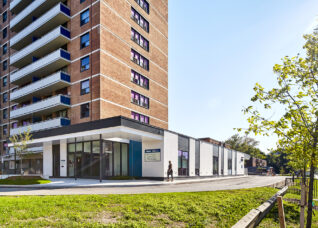 Lawrence-Orton
Toronto Community Housing’s Lawrence Orton campus is a 336-unit complex completed in 1969, which houses more than 1,000 residents. It was selected by TCHC for their landmark ‘ReSet’ program which directs comprehensive capital repair and social reinvestment at a campus scale to revitalize the most challenged sites in their portfolio. Since 2014, ERA Architects, in...
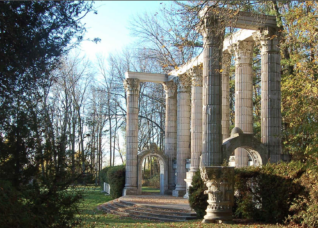 Guild Park and Gardens
Guild Park and Gardens is a regionally treasured destination park with a unique character. This 36-hectare park is layered with natural heritage systems and cultural heritage resources, set on the regionally significant landform of the Scarborough Bluffs and protected under provisions of the Ontario Heritage Act. Functioning as the heart of its local community, Guild...
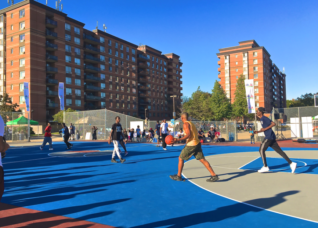 Ridgeway Community Courts
Catalyzed by a talented group of local youth, the Ridgeway Community Courts transformed an under-utilized parking lot and sidewalk boulevard into a vibrant multi-sport court and community space for drop-in recreational programming. ERA led the collaborative design process, which worked closely with the community to bring this much-needed resource to the Ridgeway neighbourhood of northwest...
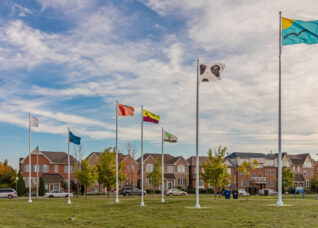 Flag Field
Flag Field is a public work by artist Josh Thorpe, located at Maple Claire Park in Toronto. Flag Field consists of fourteen custom flags on flagpoles ranging from 25 to 50 feet high. Thorpe designed the flags as simple drawings of cats and dogs, stripes and polka dots etc. — images associated loosely with the...
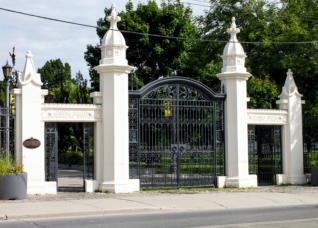 Trinity Bellwoods Gates
Trinity Bellwoods Park was formerly part of a large swath of military reserve around the nascent Town of York, founded in 1791. In 1851, Bishop John Strachan purchased the land as the site for the original Trinity College. This building was completed in 1852, and all that remains of it are the gates we see...
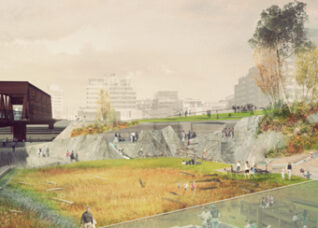 Mouth of the Creek Park
Today, lake-fill has shifted the waterfront southward, and Garrison Creek has been buried, but in the late 1700s, at the time of European settlement, this lakeshore site featured a promontory ideal for marine defense. It became the location of the first fortification at Fort York, allowing for the founding of Toronto in the protected harbour...
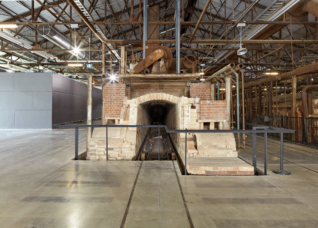 The Kiln Building (Building 16), Evergreen Brick Works
“Building 16” at the Brick Works housed several massive kilns built in the 1960s for firing and drying bricks. The kilns were fascinating artifacts, but their sheer size — 600 linear metres occupying three-quarters of the building — made the space impossible to use. From 2010–2013, ERA was involved in dissecting the kilns to reveal...
 Friends of Allan Gardens (FOAG)
Since its inception in 1858, Allan Gardens has been a distinctive part of Toronto, dedicated to offering a stimulating environment for the pleasure of Torontonians. Originating as a horticultural feature at the centre of William Allan’s Park Lot V, Allan Gardens has watched the city grow and evolve around it. ERA is pleased to be...
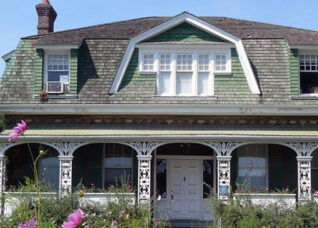 Ashbridge Estate
The Ashbridge Estate consists of two residential buildings and four outbuildings, including a two storey Regency and Arts and Crafts home, sheds and a barn, all set upon two acres of land. It was continuously owned and occupied by the Ashbridge familyfor 200 years, until 1972, when it was donated to the Ontario Heritage Trust....
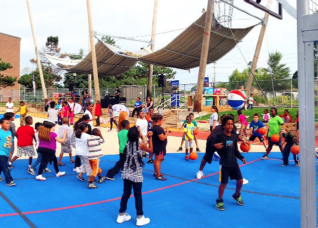 East Scarborough Storefront
This collaborative project empowered local Scarborough residents to transform previously under-utilized land into a dynamic campus of community spaces. The East Scarborough Storefront (ESS) is a community centre offering multiple supports and services to the diverse communities of East Scarborough. It was widely celebrated as a model for positive city-building in Toronto’s inner suburbs. In November...
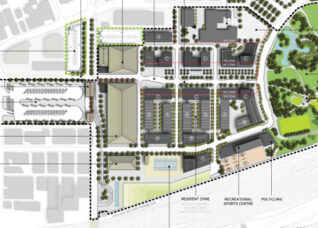 Pan-Am Athletes’ Village
The 2015 Pan/ Parapan American Games took place in Toronto, and were used as a catalyst to help drive the development of Toronto’s waterfront lands. The West Don Lands were developed as the athletes village for the duration of the games, and for later use as a residential neighbourhood. ERA was retained to serve as...
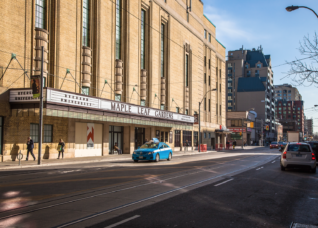 Maple Leaf Gardens
Recognized as a National Historic Site, Maple Leaf Gardens was home to the Toronto Maple Leafs hockey club until 1999 and served as a hub of civic life continuously since it opened in 1931. The arena hosted a wide variety of large-scale public gatherings, from operas to political rallies. It is one the oldest and...
Recent Projects
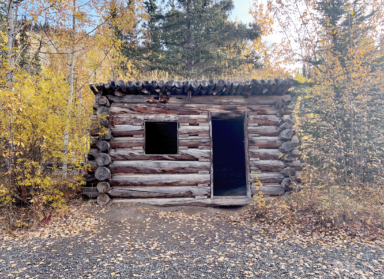
Yukon Territory