Skip to content

ERA Architects

Culture of Outports

Large red wooden chair at hiking lookout, surrounding by greenery, rocks, and water below.
Group of people standing outside looking at pieces of paper.
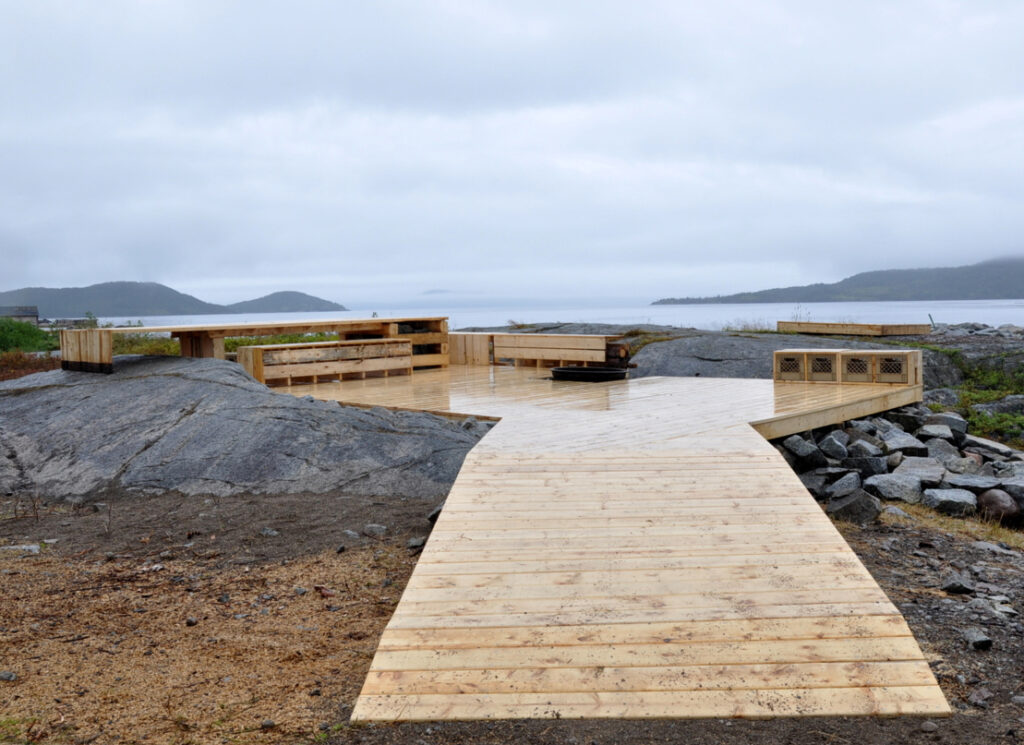
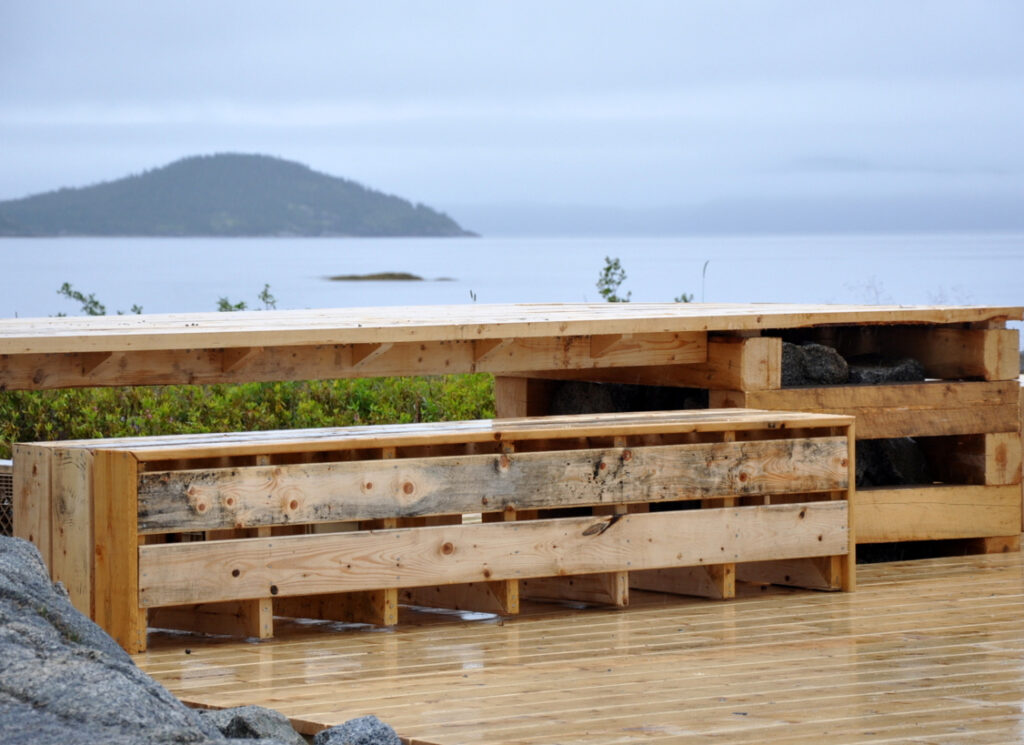
Wood platform and seating area by the waterfront.
People building a timber structure by the waterfront.
Park by a waterfront made by wood logs.
Room full of people looking at pieces of paper.
People building a wooden structure sitting on a snowy northern lake.
Wooden structure sitting on a mound of snow on a northern lake.
Person sitting on a chair of red rocks.
Inside an old building with children's drawings hanging up.
A group of people sitting on the ground weaving fish patterns into a fishnet.

En Français >

In 2010, ERA Architects founded the Culture of Outports program to address the challenges facing Newfoundland’s outport communities following the cod moratorium. The program proposed that understanding their unique history and character was essential to successfully planning and managing their future.

The Culture of Outports program set out to undertake a design-build project in different communities throughout the province. The goal was that the final built interventions would serve as a catalyst for new community-based activities and practices. Through a series of events and activities, the team would learn from each community, thus informing the design and allowing it to reflect the community’s values and needs.

The Culture of Outports program has delivered two Cultural Resource Management Reports (Burlington and Port Union), countless hours of community engagement, historical research and design exercises, and the construction of five interventions.

Brigus

Our 2012 project built a bright red deck-like structure on a historic lighthouse trail that had become underused. The design is meant as a destination point, a gathering place, a lookout, and a visual flag for the trail itself. Its design plays off local wood construction such as docks, boardwalks, and piers, and incorporates the use of traditional drystone walls. With this project, we were able to bring more awareness to the trail, encourage its use, and stimulate local and tourist engagement in an important cultural resource.

Read more Launch, and Completion.

Burlington

ERA taught an intensive two-week design/build course in the small outport of Burlington, Newfoundland. The course was run through Dalhousie and began with a lengthy road trip from St. John’s, where students had the opportunity to study and immerse themselves in the local and material culture. Then, working with the full support of the Burlington community and assisted by a range of craftspeople, ERA led the six architecture students in the design and construction of a small-scale intervention bred from site-specific conditions, drawing upon vernacular building techniques and traditional craft practices, and making use of local materials. The new waterfront installation would serve as a gathering place, lookout, performance stage, fire pit, campsite, and local landmark.

Read more Project Overview, Launch, and Completion.

Port Union

Founded in 1916, Port Union was long the headquarters of the Fishermen’s Protective Union and is North America’s only union-built town. The 2013 design, known as Foundation Square, was sited at the central waterfront location in town and is intended as a landmark, meeting place, picnic area, and playground. The Square includes a new boardwalk connection to the existing shoreline walk, an arch framing the view of the ocean, seating for rest and dining, and a fire pit to gather ’round at night. All materials were locally salvaged, and community members of Trinity Bay North (including residents of Catalina, Little Catalina, and Melrose) were fully engaged in the entire design-build process.

Read more  Project Overview, Launch, Progress, and Completion.

Botwood

Our 2013 project took place in the winter and was hosted in Botwood, Newfoundland, a town of 3000 that has served as a major port of trade (both air and ocean) and an important base for the RCAF during WWII. Our design intervention was located on the popular Killick Island Walking Trail and was built on the foundations of a 1920s weather station. Recalling the basic form of the historic structure, the “Viewfinder” frames views of two historic crash sites (Excalibur and Canso), a local plane monument, and the terminus of Killick Island itself.

Read more  Project Overview, Launch, Progress, and Completion.

Bell Island

In 2015, Culture of Outports paired with the Bell Island Mine Museum to design a landscape installation for the museum grounds. Bell Island is an outport that holds a rich history in iron ore mining. The No. 2 mine is one of the island’s only preserved mines, which currently features a museum and a unique walking tour of the underground shafts. Students worked closely with the Museum to generate a design that celebrated the island’s mining heritage and supported the Museum’s role as a hub for the local community. Making use of iron-ore tailings that were piled around the museum grounds, students created a series of benches that were embedded in the landscape to serve as a “miner’s memorial garden”.

Read more  Project Overview.

Bonavista

Situated on the Bonavista Peninsula approximately four hours from St. John’s, Bonavista is one of Newfoundland’s oldest communities. Once a major commercial fishing area, Bonavista is now faced with the unique challenge of being a growing rural outport. The mix of artistic, entrepreneurial, and industrial opportunities offers a strong appeal to both new and former residents. The Town has identified distinct design challenges to incorporate growth and change into the vibrant cultural heritage of the area. The summer 2017 Culture of Outports project included an immersive design charette in coordination with 2 Rooms Contemporary Art Projects, Assembly’s Wandering Pavilion, and a small group of Toronto Metropolitan (formerly Ryerson) University architecture and design students. The team travelled to and stayed in Bonavista to tackle some of these design challenges. A series of workshops, meetings with key stakeholders, and community engagement events were completed, with a final report presenting design opportunities and next steps.

Read More  Project Overview.